
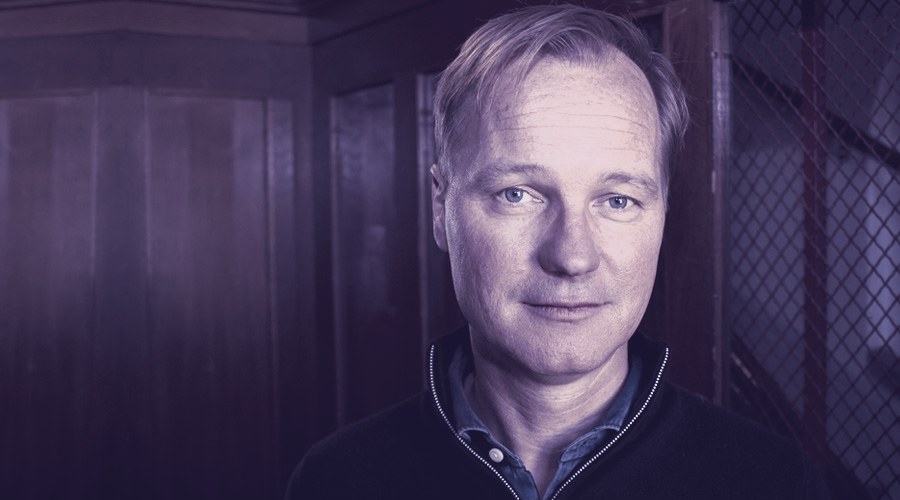
Strawbay began with a conviction Claes Ramel kept returning to: a financial business should be able to see, monitor and change its whole ecosystem of integrations, and the data moving between its systems, from one place. That so many platforms were also rebuilding the same connections by hand was the visible symptom. We sat down with him to hear how it turned into a company.
Ask Claes Ramel where Strawbay started, and he does not begin with technology. He begins with a feeling familiar to anyone who has worked close to financial operations: that no one could really see or steer the web of connections their business depended on, and that the same hard work was being redone over and over just to keep it alive.
“What I kept missing was oversight. A finance business should be able to see its whole ecosystem of integrations, and the data moving between systems, and change it, all from one place. That is the real need. Everyone rebuilding the same connections is the symptom you notice first.”
Claes Ramel, Co-founder, Strawbay
And rebuild they did. Wherever Claes looked, smart teams were spending months wiring the same systems together, a factoring platform here, a collection platform there, each one building its own connection to Fortnox, to Visma, to the banks. He is careful not to dismiss it: that work is partly necessary, and it genuinely creates value. But it is also a temporary, slightly absurd state of affairs, the same plumbing rebuilt again and again, every version a little more fragile than the last, and almost none of it giving anyone a clear view of the whole.
“All that rebuilding is not stupid, exactly. It is partly necessary, and it does create real value today. But it is temporary. The prize is not another hand-built connection, it is making the whole web of integrations visible and yours to steer.”
Claes Ramel, Co-founder, Strawbay
The cost of all that repetition was not just engineering time. It was speed to value, and it was blindness. A new client could not get started until someone had built or maintained yet another one-off integration, and once it was live it became one more thing that could break at three in the morning, with no single place to watch it from. The work was slow to deliver, brittle to keep running, and hard to see across.
The insight that became Strawbay followed from the goal. If a business is going to see and steer its whole ecosystem, the connections cannot live buried inside each separate product. They belong one level up, built once at the level of the system itself, then reused, and watched, across every customer who needs them.
“The moment it clicked for me was realising you should connect once, at the level of the system, and reuse that everywhere. You do not write bespoke code for each customer. You build an engine, plus ready-made packages for the systems people actually use, and then onboarding becomes configuration instead of construction, and the whole estate becomes something you can actually observe.”
Claes Ramel, Co-founder, Strawbay
That shift, from one-off code to an engine with ready-made packages, is what makes the oversight possible. Instead of treating every integration as a fresh project, Strawbay treats the hard part as something you solve well once and then deliver, and monitor, many times. The number of different systems you support is what takes the work, not the number of customers you bring on board. That is what makes 1-to-n onboarding, consolidating many end customers across many systems into one master system, something a small team can do at scale, and keep an eye on.
From there, the vision widened. Finance in Europe runs on data flows that have to be stable, secure and quick to stand up, in a setting where regulation is part of daily life. Claes wanted those flows to rest on something solid, and visible, rather than on a tangle of bespoke connections that no one fully trusted or could fully see.
“What I really wanted to build was steady ground. An integration layer European finance can stand on, anchored, dependable, observable, and increasingly supported by an agent layer that helps deliver and watch over the work. Not a clever bolt-on, but the floor underneath the whole thing.”
Claes Ramel, Co-founder, Strawbay
That anchored, agent-supported integration layer is where Strawbay is heading. The engine ships complex integrations faster and holds steady as volume grows, the ready-made packages cover the systems customers actually run, and the agent layer is woven in rather than stapled on, helping the people who deliver, monitor and adjust the flows that businesses depend on.
For all the engineering underneath, Claes keeps coming back to the human goal. The point was never integration for its own sake. It was to let the teams that run European finance see their whole ecosystem, trust that the data keeps flowing, and change it when they need to.